THE FLIGHT
A blur and a hum
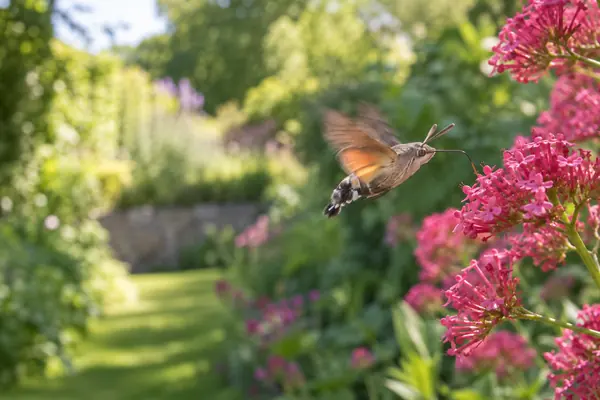
It beats its wings about 80 times a second, so fast that it hums. It hovers at a flower to feed, then zips to the next.
See the numbers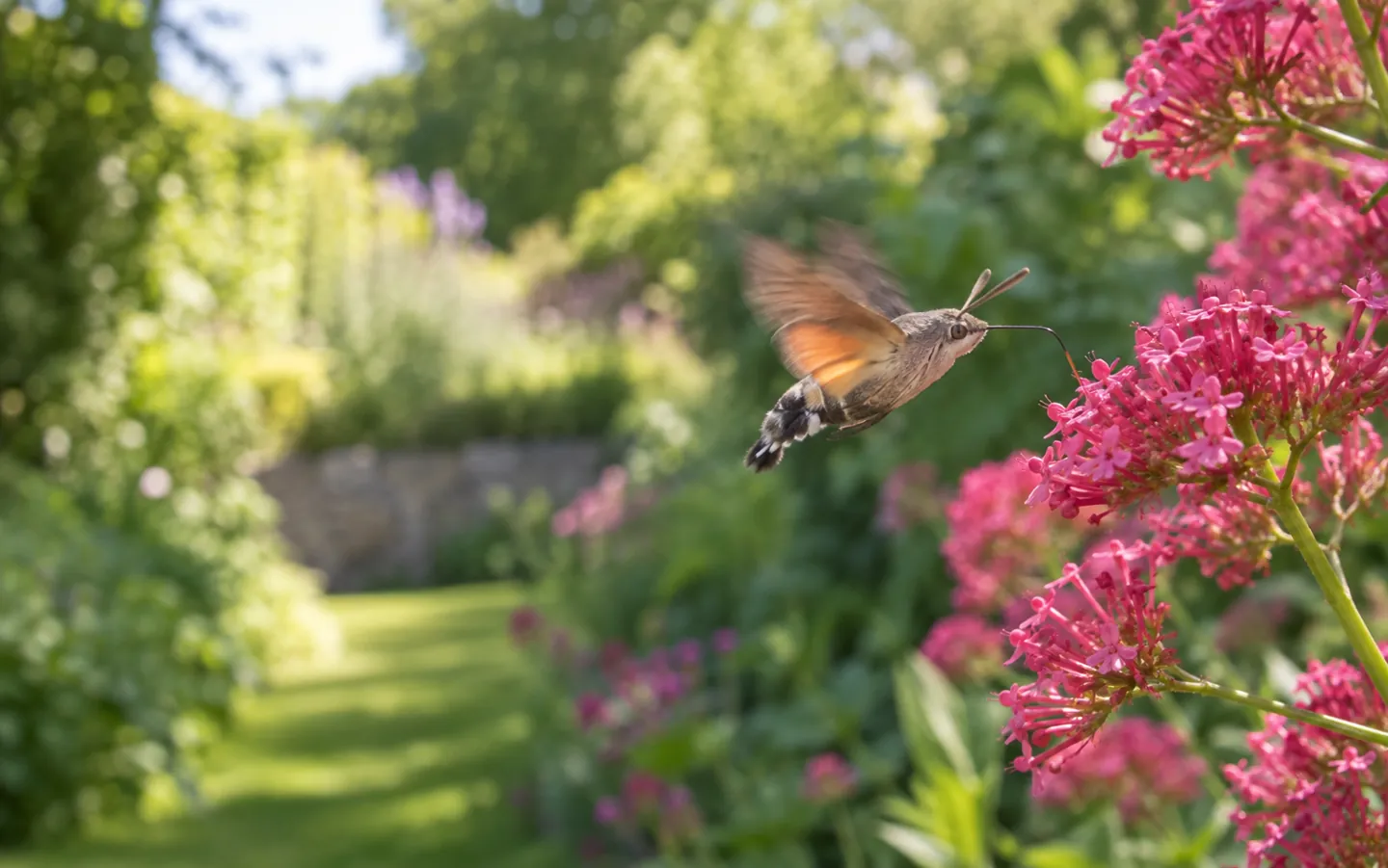
A SUMMER VISITOR, EXPLAINED
80 BEATS a second, says Butterfly Conservation
AI-generated image, not a photograph of a real person or place.
Europe has no wild hummingbirds, but it has this.
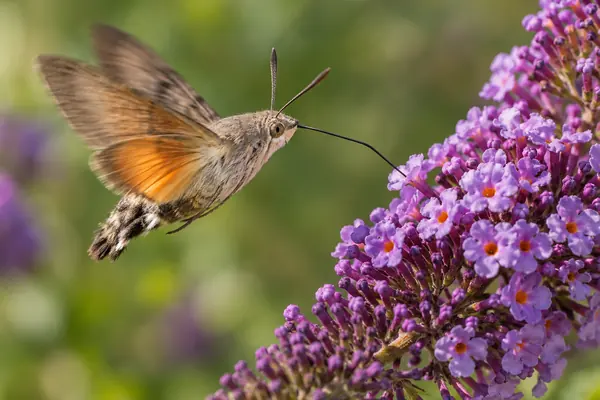
The hummingbird hawk-moth hovers in front of flowers, drinks through a long curled tongue and hums as it goes. It flies in daylight, arrives from southern Europe and North Africa, and turns up in gardens across the UK.
THE SHORT ANSWER
Most people mistake it for a tiny bird.
Three things give it away.
THE FLIGHT
It beats its wings about 80 times a second, so fast that it hums. It hovers at a flower to feed, then zips to the next.
See the numbersTHE LOOK
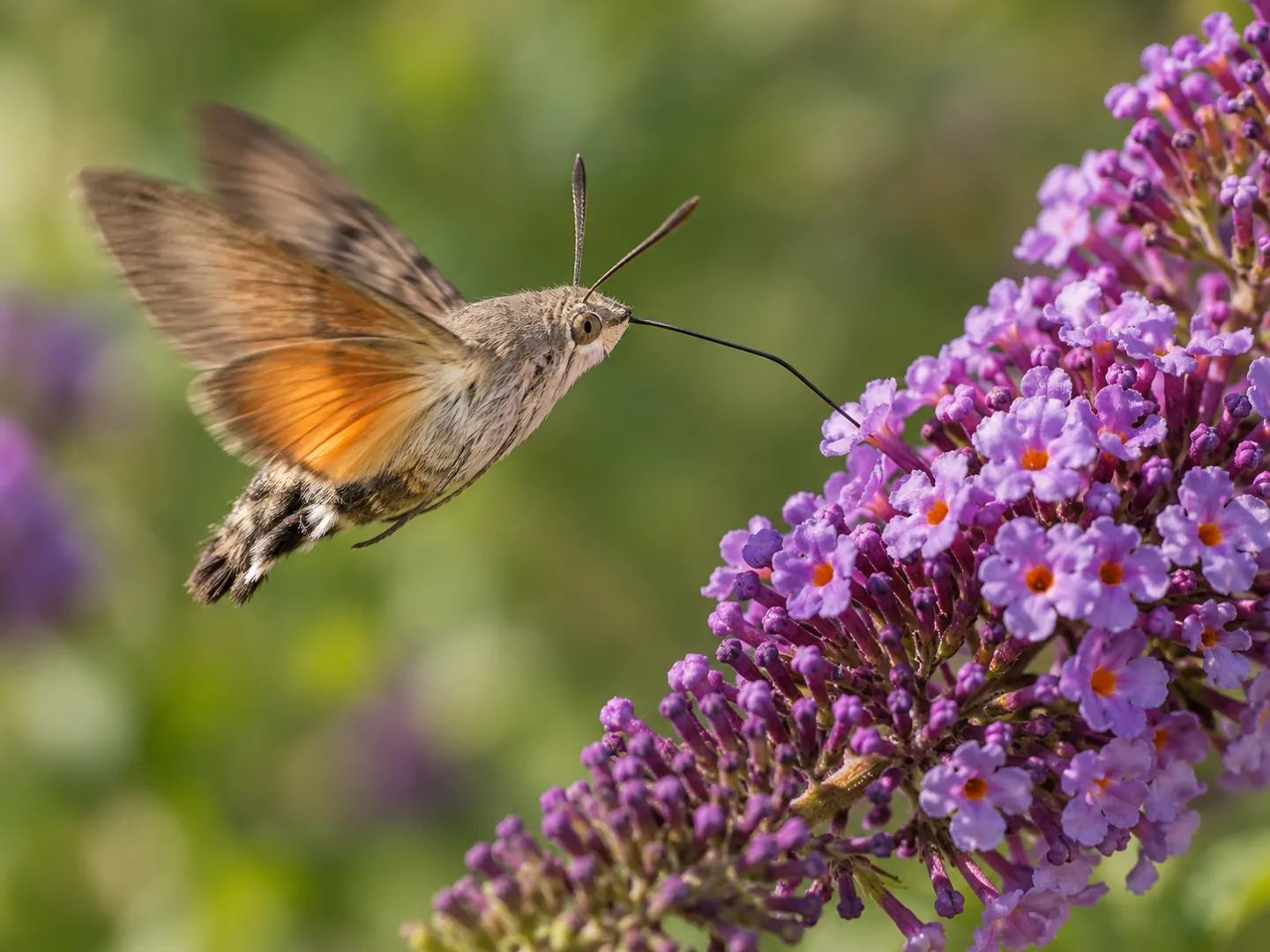
Grey-brown forewings, orange hindwings and a black-and-white chequered tail. The tongue is about an inch long and curls up when not in use.
Tell it apartTHE FLOWERS
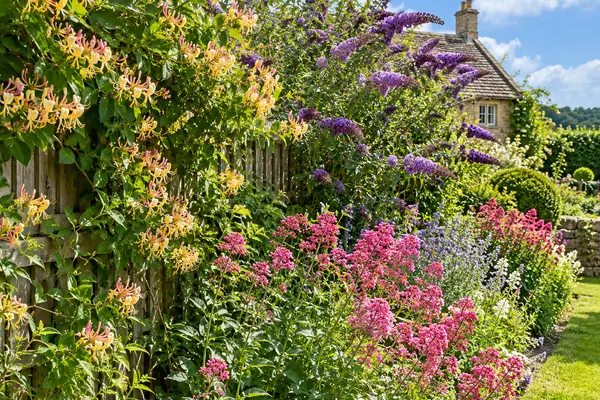
Honeysuckle, buddleia and red valerian are favourites. BTO adds pink and purple flowers such as viper's bugloss.
Plant for it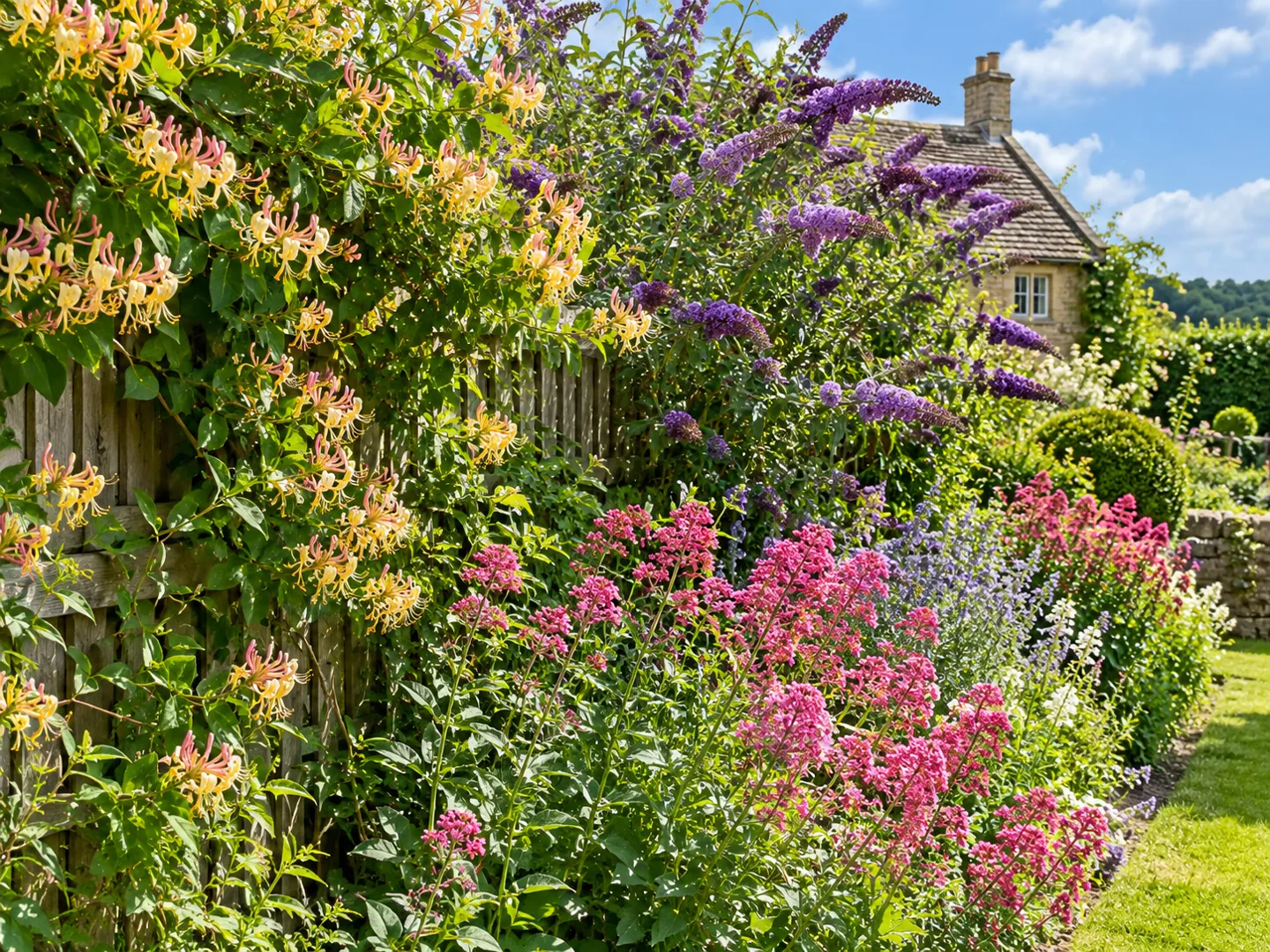
FOUR WAYS TO SEE ONE
You cannot make a migrant arrive, but you can give it the flowers it looks for and know when to watch.
Honeysuckle, buddleia and red valerian are named by Butterfly Conservation as flowers that may help bring it in.
BTO says watching these plants on warm, sunny days is the best way to spot one, especially in July and August.
Caterpillars feed on lady's bedstraw, hedge bedstraw, wild madder and cleavers, so a wild corner gives them somewhere to breed.
Butterfly Conservation asks people to submit sightings to the National Moth Recording Scheme.
TWO NUMBERS WORTH KNOWING
One figure on how it flies,
one on how a warm summer changes sightings.
80/s
Wingbeats every second
Butterfly Conservation says the moth beats its wings 80 times every second while it hovers and feeds, which is what makes the humming sound.
WINGBEATS · BUTTERFLY CONSERVATION
4× more
Gardens recording one, record year vs typical
In July 2022, 5.2% of BTO Garden BirdWatch gardens recorded a hummingbird hawk-moth, against 1.3% in a typical year, and 7.5% in southeast England.
GARDENS · BTO, JULY 2022
Butterfly Conservation later estimated a roughly ten-fold increase in sightings across the UK in 2022, based on provisional figures.
A QUICK SEASON CHECK
Pick a time of year to see how likely you are to spot one in a UK garden. The bar shows how often sightings turn up at that time.
Based on Butterfly Conservation, BTO Garden BirdWatch and The Wildlife Trusts. Numbers vary a lot from year to year.
MOTH OR BIRD?
Real hummingbirds live only in the Americas, so the Great Fen Wildlife Trust calls this moth the only hummingbird in Europe. The two are not related: they arrived at the same way of feeding, hovering at tube-shaped flowers, separately.
Look for grey-brown forewings, orange hindwings and a black-and-white chequered tail. Unlike most moths it flies in the day, and Butterfly Conservation says it can even fly and feed in the rain.
In conversation
An insect. It is a day-flying hawk-moth, Macroglossum stellatarum, named for the way it hovers at flowers like a hummingbird. Wild hummingbirds are found only in the Americas.
Butterfly Conservation says it flies between May and September, with occasional sightings all year. BTO says July and August give the best chance.
It is a migrant from southern Europe and North Africa. Some now overwinter in sheltered places, mostly in South West England, and some breed in the UK.
Adults drink nectar from tubular flowers such as honeysuckle, buddleia and red valerian. The caterpillars eat bedstraws, wild madder and cleavers.
BTO linked the 2022 influx to a long spell of warm southerly winds, and Butterfly Conservation says moth migration to the UK is increasing as species respond to the changing climate.
Each figure on this page comes from the sources below.
ABOUT THIS NAME
zippydoodle.com is part of the DoodleSale portfolio. It isn't in an auction right now, but you can ask about leasing it.